
As the major theme of this Year of Yang-Fire Horse is shaping up to be the conflict around the Strait of Hormuz, I was inspired to look into the meaning of the name of this current center of geopolitics.
As it turns out, Hormuz is the Middle Persian pronunciation of Ahura-Mazda, the supreme deity of Zoroastrianism. This ancient indigenous religion of Iran pre-dates the Abrahamic religions of Judaism, Christianity, and Islam.
The closest encounter most of us who grew up Christian have had with Zoroastrianism is probably the Three Wise Men who saw the Star of Bethlehem and journeyed west to Isreal to greet the Baby Jesus. These magi were most likely Zoroastrian priests from Iran adept in the mantic arts.
Zoroastrianism sets forth the basic view underlying Western thought that human life is essentially a dualistic struggle between good & evil. Ahura-Mazda (“Lord of Wisdom”) is the deity of goodness and light. He is positioned in opposition to Angra-Mainyu (“Spirit of Destruction”), the deity of evil darkness. These two deities struggle for victory over one another – in the cosmos and in the hearts of human beings.
Though the details have evolved through the different Western religions, they all distill to this same basic struggle, yes? And now here we are in a struggle over the Strait of Hormuz, the US Secretary of Defense invoking Jesus in his war updates. The people driving this war believe we are in a religious war, and the people we are fighting also believe we are in a religious war. Judeo-Christianity against Shia-Islam. Which deity is good, which is evil?
When Dao is present under Heaven
Horses walk [the fields] spreading manure
When Dao is absent under Heaven
War-horses breed along the frontier
-Dao De Jing Chapter 46
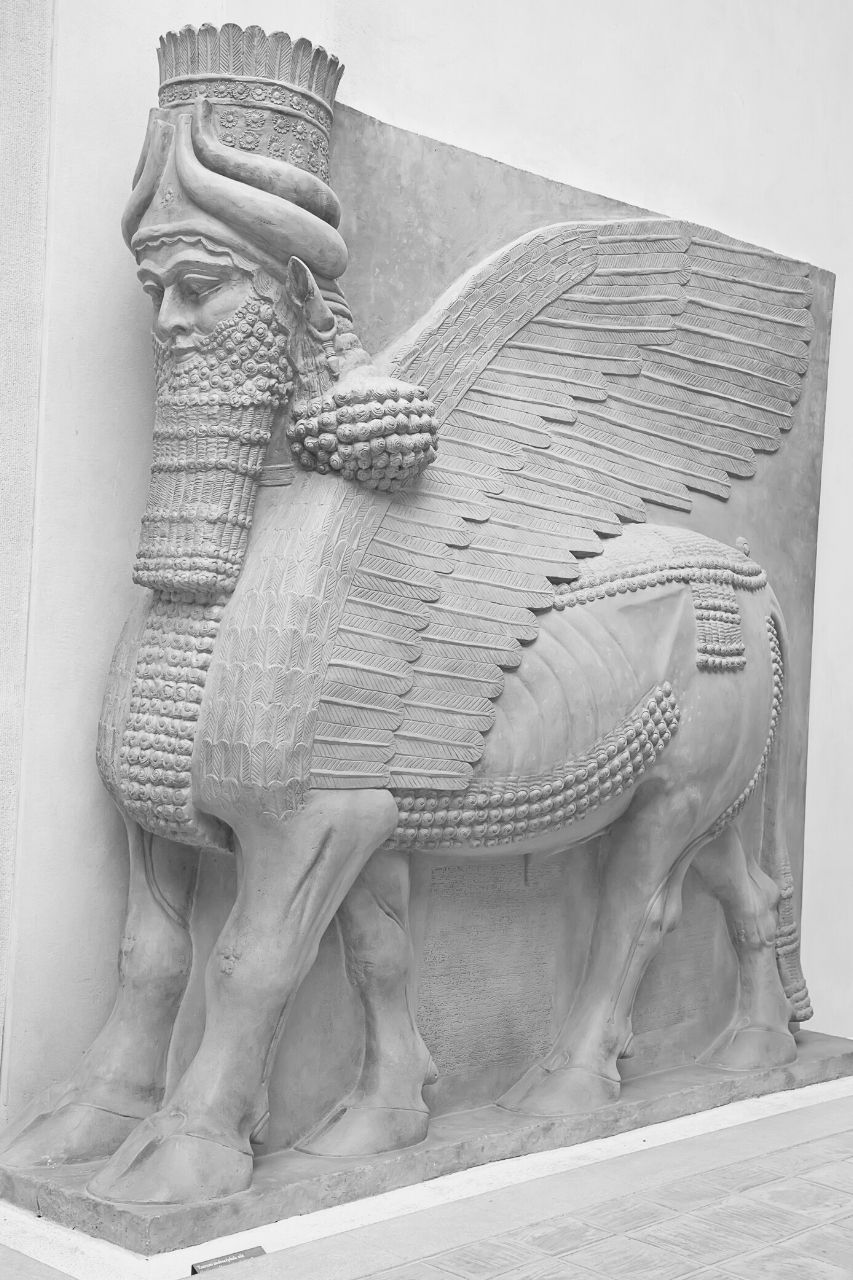
While Islam forbids the generation of images representing its deity, it is interesting to note that Ahura-Mazda is traditionally symbolized by the image of a bearded king merged with a winged horse. Listen to the Yang-Fire Horse talk and note how perfectly that image fits Yang-Fire Horse qi!
While the central message of Yang-Fire Horse is about comporting ourselves in a manner to support its noble exalted aspects and reign in its wild aggressive tendencies, let us take the opportunity to note that struggle between good & evil is really not the basis of Daoism.
While the ganying principle of Daoism does recognize natural consequences – good action brings good result, bad action brings bad result – the central point of Daoist practice is not just about maximizing good and minimizing bad.
In Dao De Jing Chapter 42, Laozi says: “the ten-thousand things carry yin and embrace yang, mixing qi to harmonize”. Daoism is not a process of overcoming darkness to reach light. It is perhaps a process of distilling and refining, in which our nature reveals itself as utterly pure darkness and utterly bright luminosity at the same time.
How do we approach such inconceivableness? Our tradition says we don’t do it through conceiving concepts of good & evil, right & wrong, and battling it out in a process of effort and struggle. Dao (道) is already-&-always as it is, of itself. We cannot possibly make it so through our own efforts. De (德) – the virtue of aligning with Dao – comes from relaxing conceptions, forgetting ideas and images, relaxing our efforts to get-it-right. That’s called wuwei. As it turns out, basic goodness arises of itself. Without identifying with this deity or that, without engaging in ideas of right & wrong, without struggling for good-over-evil, we effortlessly pass through the Strait of Hormuz.
